Monday, July 27, 2015

Ranch Poetry

After we get done bringing in the cattle, as we were eating lunch, someone mentioned that there was a funeral on the northern part of the island, and we talked about who that person was, who his friends had been, which brought Ryan, the ring-leader of the group of Japanese cowboys that help us out on weekends, to think of another man he had known, a guard at the minimum security prison where they had both worked.  

I didn’t get his name, this man who was, in Ryan’s description, “quiet and serious”, who “did things by the book” but if you were straight with him he was a good guy, solid, not one to “talk big and then duck out when things got rough," when a prison fight was brewing for instance and the guards needed to watch each other’s backs.  This quiet man, who never married and lived alone, found out that he had brain cancer and one day he spread a blue plastic tarp in his back yard, left a note to the emergency workers apologizing for the mess, and shot himself in the head.  Ryan told the story with obvious respect for this man who left the world with the courtesy and resolve of a samurai. 

Earlier that morning, we were all waiting in the pasture for the roundup to begin, scattered but within earshot of each other.  It was a clear morning in early spring: the mountains were golden and green, the ocean blue and purple, and we could see across the desert to the white billowing smoke of the fire-pit Halema’uma’u.  My nephew began to chant in his deep young voice.  I didn’t know what his chant meant but it floated through the morning air as naturally as if it had come out of the very rocks around us.

Later I asked my nephew what the chant was called and he said, “I don’t know, it’s just a chant I learned for when we go into class.  I was chanting because I saw some petroglyphs there in the rocks.”  

We are not a demonstrative, performing sort of family.  When my brother and I were growing up singing and dancing were not encouraged; we didn’t even tell a whole lot of jokes. So my nephew’s chant was a small piece of courage.  Of making something new.


The root of the word “poetry”  is the Greek work “poiesis,” which means “to make”.  There is not much more beautiful and valuable in this world, to my mind, than these small, personal, communal offerings of words to each other.  I would call  that poetry.    Here we are, the common people, with our small moments of poetry.  

Thursday, July 2, 2015

simple-minded

You have to show up
is
what it comes down to
always
whatever it is
that better world is not
going to make itself
and the path will be bitter
sometimes and merry others
and nothing is
certain

Friday, June 12, 2015

New Information

The title of this blog has changed, as you may have noticed.  New information came to light, as they say.   I named this blog after the one of the winds of Ka'u, whose name I got from a passing conversation with a friend who happens to be a great authority on all things native Hawaiian.  I thought she called the wind ehulepo but perhaps I misheard her, because it is called kuehu lepo in the song "Aloha No Ka'u."  My daughter Ua pointed this out to me.  And it makes more sense, linguistically.


Aia i ka lae hema o Keawe
P ā mai ana ka makani Kuehu Lepo


There at the southern tip of Keawe
The Kuehu Lepo wind blows


page1image21328
page1image21328

Wednesday, June 10, 2015

Wow, it's been more than a month since I've "blogged" or written anything of substance, really.

 I've read many interesting books, the meantime.  Most stimulating perhaps was "The Science of Interstellar" by the movie's consulting physicist Kip Thorne, with its discussions of wormholes, our universe as a four dimensional membrane ("the brane" in physics nerd-speak)within a five-plus dimensional "bulk" and, more prosaically, the politics and mechanics of how a movie gets made.

The most fun was reading Books Two and Three of the "His Dark Materials" trilogy by Phillip Pullman, which also involves worm holes of a sort, dark matter, and multiple universes interwoven with the grand Christian eschatological vision of John Milton, and lots of talking animals.  What's not to love about that!

And I've come to the conclusion that, pace Kip Thorne and the other techno-physicists that want to escape this planet for an interstellar destiny, there are only three physical dimensions.  And there are no wormholes, or ever will be, that will let us escape our three-dimensional physical bodies. (Except maybe death?)

There are however at least two other dimensions: Time and Meaning, but these are biological, rather than purely physical dimensions.   And that is where "the sciences" and "the humanities," in the current,  rather silly, division of knowledge, meet up, ineluctably - although we don't really know it yet, so wrapped up are we in the technology that a purely physical physics has delivered to us (at our peril.)  We have a ways to travel yet before we see ourselves clearly as minds within the larger mind of the world/universe/universes, if we ever do.


Wednesday, April 29, 2015

The Baby Oyster in the Coal Mine


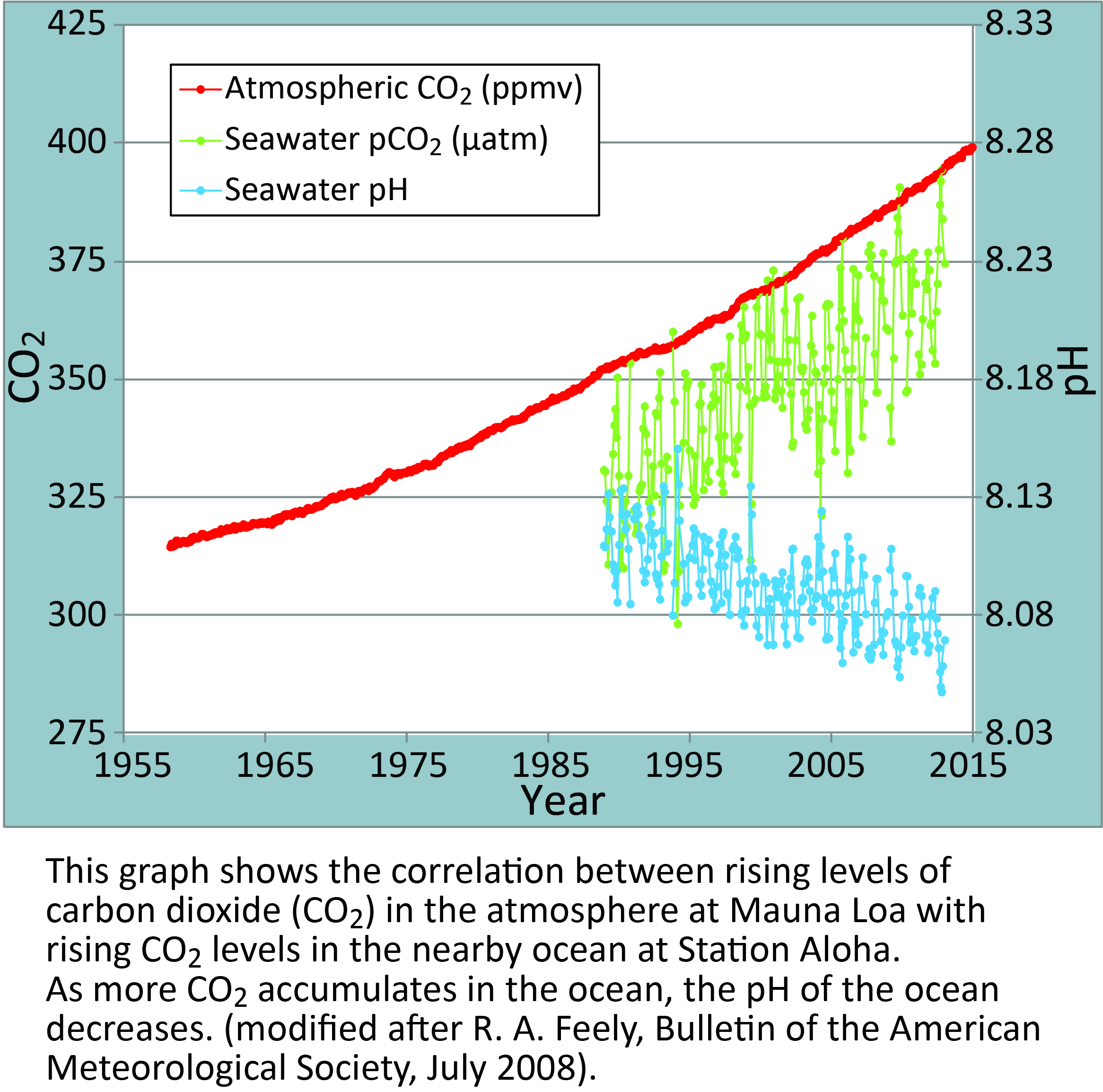
I had one of those moments when you realize that we are in big trouble yesterday when, at a Board of Agriculture meeting,  a petitioner for a routine permit to import Kumamoto oysters mentioned that the reason he has a viable business hatching oysters here in Hawaii is that the sea-water on the West Coast has become too acidified to support healthy baby oysters.  Evidently the acidity interferes with the oyster hatchlingsʻ ability to form calcium into a structurally sound shell.    Itʻs a business opportunity for some aquaculturists in Hawaii, but thatʻs the silver lining on a big, black cloud that is looming over all of us. 


Saturday, April 18, 2015

The Thirty-Meter Telescope (TMT) and the Ten Thousand Galaxies


My daughter and I disagree on the Thirty Meter Telescope.
Construction was to begin a couple of weeks ago but the road was blocked by protestors, and the protests grew and then went viral on social media.  The TMT would be the largest telescope on earth (although they are supposedly building one of similar size in Chile) and would be the 14th telescope on Mauna Kea, our tallest, most beloved, and, yes, sacred mountain.  It will take ~10 years to build, will cost $1billion, and be 180 feet tall. The protestors say enough already.
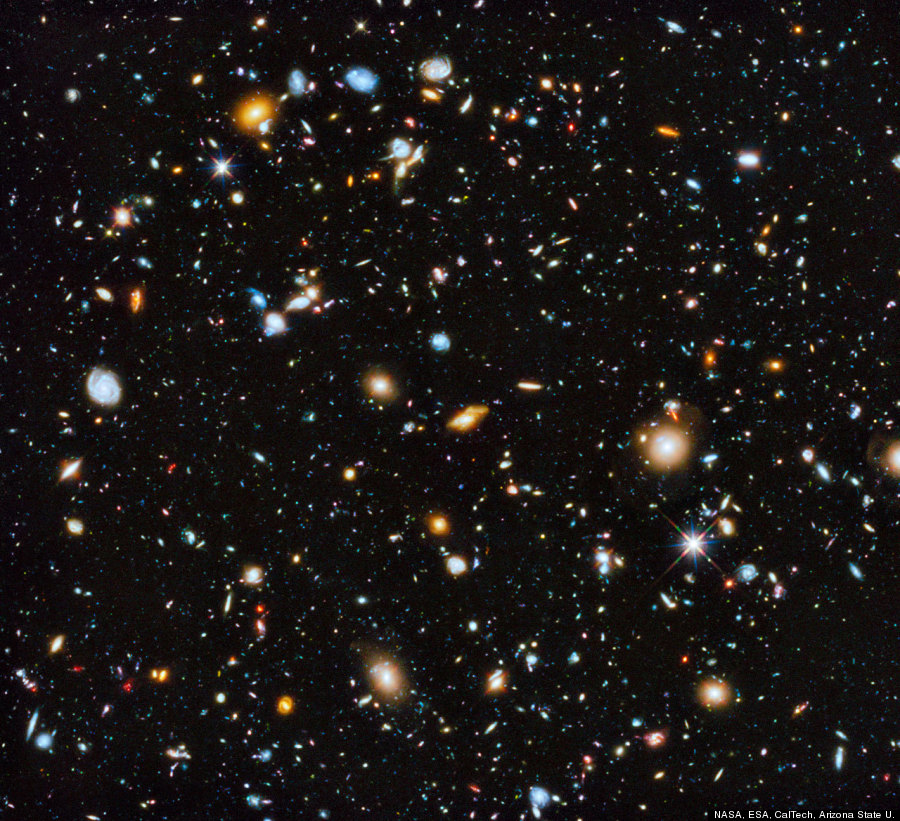
Personally I am entranced by the above photo taken from the Hubble.  I want to know more about the origins of the universe and the nature of dark energy and dark matter.    Supposedly the TMT will allow our gaze to reach new edges of what is known and imaginable.
But my daughterʻs disapproval of the TMT troubles me.  If she, and most of they young people her age, donʻt want it on that mountain, then what is the point of building it?  It is more important that we honor their nascent sense of the wild and sacred than to build another machine, even one as relatively benign as a telescope.  Even one that could bring us more beautiful images than the one above. They will only be images after all, and we have lots of images already.   What we need more than images is  the ability to love the land and protect it from destruction by those who do not know how to love the land.  If the TMT must be sacrificed to nurturing that love, so be it.

Tuesday, April 14, 2015


What we prize and what we have built in Western civilization: edifices and expanses of stone, steel, concrete, intricate and globe-spanning machines (this here internet).  Our high arts - painting, sculpture, photography, architecture, video - all involve the manipulation of non-living materials to mimic or evoke life.  The mental arts that we value -  mathematics, logic, logos, the Word of God, books, poems - all depend upon a distancing of the mind, a translation of the world into symbols.  All of our paths lead us away from actual living life and into a place of clean, pure abstractions.

It is no little thing to turn that ship around.  I'm going to stop hating on Descartes and blame it on Plato instead, for a while.

Green grass and flitting birds, forests and wild pigs, gardens and pastures, fleas and earthworms  - those do not turn up in The Republic.  Why?  Big-time epistemological error, Plato. Socrates' verbal bullying skills are not really all that interesting.

Why do we have to  fall down in awe in front of Michelangelo and Da Vinci? Or Prada, for that matter.   The mountain that it is my privilege to see every day is a thousand times more beautiful and fascinating than even a Velasquez.   My horse has things to impart that are more profound than King Lear.  Seriously, but it's not in words.  A horse speaks in movements and in relationships that exist in the present.  As in Right Now.  A Right Now that is so big and so fast that I am barely able to comprehend it, but if I am really, really alert I catch a little bit.  A little bit about the relationship between the faint breeze and the distant mountain, maybe, before it changes and is gone and we are in another Right Now where I'm struggling to keep up with what is going on.